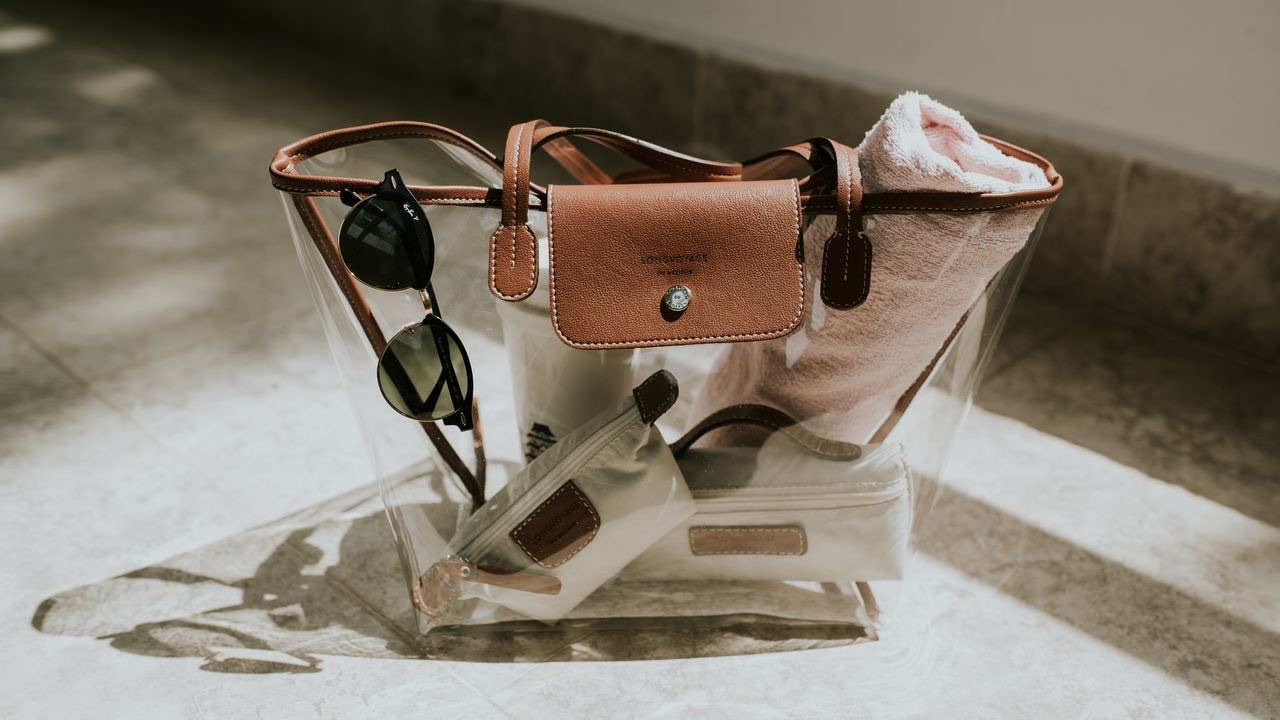
The word “waterproof” on a beach bag label covers a wide range of actual performance. At one end, you have bags that resist light splashing for a few minutes. At the other, bags that can sit submerged without the contents getting wet. Most beach bags marketed as waterproof fall somewhere in the middle, and the specific materials and construction methods used determine exactly where.
For wholesale buyers specifying beach bags for retail, and for consumers trying to understand what they’re actually purchasing, knowing what the materials mean in practice is more useful than the marketing claim.
The difference between water-resistant and waterproof
Water-resistant and waterproof describe different levels of protection, and the distinction matters for beach use specifically. Water-resistant fabrics slow water penetration but eventually saturate — a water-resistant bag left in a rain shower for ten minutes will eventually let moisture through. Waterproof fabrics block water penetration entirely, as long as the fabric itself is intact and there are no open seams or entry points.
For a beach bag, the relevant water exposure includes: wave splash, wet swimwear placed inside, sand mixed with water, and rain. Full submersion is typically not the design target, but prolonged exposure to wet conditions is. The material specification needs to handle continuous wet contact, not just brief splashing.
TPU: the current benchmark for beach bag waterproofing
Thermoplastic polyurethane (TPU) is a polymer that forms a continuous film when applied to fabric — either as a coating or as a laminate layer bonded to the base material. The resulting fabric has no pores through which water can penetrate, making it genuinely waterproof rather than merely water-resistant.
TPU has several properties that make it well-suited for beach bags. It’s flexible across a wide temperature range, so it doesn’t crack in cold conditions or become stiff in a way that makes the bag uncomfortable to carry. It’s abrasion-resistant, which matters for bags that will be dragged across sand. It can be heat-welded at seams, eliminating the stitched-seam vulnerability that undermines the waterproofing of otherwise watertight fabric. And it doesn’t off-gas plasticizers the way PVC does, making it more stable over time and more acceptable under food contact and skin contact safety standards.
The TPU layer thickness in beach bags typically ranges from 0.1mm to 0.5mm depending on the application. Thinner coatings are lighter and more flexible but less durable; thicker laminates hold up better to abrasion and repeated flexing but add weight. For a tote bag intended for regular beach use over multiple seasons, mid-range TPU thickness (0.2–0.3mm) on a woven base fabric provides a reasonable balance.
PVC: the established alternative with trade-offs
Polyvinyl chloride (PVC) has been used in waterproof bags for decades and remains common in the lower-to-mid price segment. PVC-coated fabrics are genuinely waterproof and reasonably durable, and they’re less expensive to produce than TPU laminates.
The trade-offs are real. PVC contains plasticizers — typically phthalates — that migrate out of the material over time, contributing to the distinctive smell of new PVC products and to material stiffness and cracking as the bag ages. Many phthalate plasticizers are restricted under EU REACH regulations and California Proposition 65, which creates compliance issues for wholesale buyers selling into those markets.
PVC is also less flexible than TPU in cold temperatures, becoming noticeably stiff in cool or cold weather. For beach bags used year-round in variable climates, this matters more than for products used only in peak summer conditions.
For markets with less stringent chemical regulations, or for price-sensitive segments where the buyer is explicitly trading long-term durability and chemical compliance for lower unit cost, PVC remains a practical option. For premium retail positioning or for markets with strict regulatory environments, TPU is the stronger choice.
Laminated fabrics: construction rather than material
Lamination refers to the process of bonding layers together permanently, as opposed to coating, which applies a material to the surface of an existing fabric. The distinction is relevant because laminated constructions typically achieve better delamination resistance — the layers stay bonded through repeated flexing, washing, and mechanical stress more reliably than coating-only approaches.
A typical waterproof beach bag fabric might be: outer woven face fabric (nylon or polyester for strength and aesthetics) + middle TPU film layer + inner fabric lining. The three layers are bonded together under heat and pressure, creating a composite that’s waterproof through the middle layer, strong from the outer weave, and comfortable against the contents from the inner lining.
Laminated constructions allow the face fabric and waterproofing layer to be optimized separately — the outer fabric can be chosen for color vibrancy, texture, or printed pattern while the waterproof performance comes from the TPU layer rather than a surface coating that might affect the visual finish.
Seam construction: where most “waterproof” bags fail
The most common failure point in bags made from waterproof fabric is the seams. Any time fabric is stitched together, the needle creates holes. In a standard sewn seam on waterproof fabric, those holes are potential water entry points that undermine the waterproofing of the fabric itself.
Three approaches address this. Seam sealing applies a waterproof tape over stitched seams after construction, covering the needle holes. Heat welding bonds fabric edges together without stitching, creating a continuous waterproof join. RF (radio frequency) welding uses electromagnetic energy to bond PVC or TPU materials together at a molecular level, producing the strongest and most waterproof seam type.
Heat-welded or RF-welded seams represent the highest level of seam waterproofing and are found in higher-specification beach bags. Taped seams represent the mid-tier approach — the tape adds waterproofing over stitching but can eventually peel or fail at seam stress points. Unfinished stitched seams on “waterproof” fabric offer limited actual waterproofing in anything beyond brief splash contact.
Zippers: the other entry point
A bag with waterproof fabric and sealed seams but a standard zipper is not genuinely waterproof — the zipper itself is a water entry path. Waterproof zippers use a water-blocking structure (either a water-repellent finish on the zipper tape or a physical barrier design) to prevent water from tracking through the zipper closure.
Genuine waterproof zippers from suppliers like YKK’s Aquaguard line are noticeably more expensive than standard zippers. Many bags marketed as “waterproof” use standard water-resistant zippers that perform adequately for splash exposure but won’t seal against sustained water pressure. For buyers specifying bags through factories offering wholesale beach tote bags, confirming the zipper specification — including the specific zipper model and water-resistance rating — is as important as confirming the fabric specification.
What to look for when specifying a waterproof beach bag
For wholesale buyers, the material specification should cover: fabric composition and weight, TPU or PVC coating/laminate thickness and application method, seam construction type (stitched, taped, welded), zipper specification, and any relevant certifications (REACH compliance for EU markets, CPSC compliance for US markets involving products with accessories like buckles or hardware).
For consumers, the practical proxy is construction detail: heat-welded or taped seams visible on the interior, labeled waterproof zippers, and a TPU or laminated fabric description in the material specification rather than just “water-resistant” in the product title. These details distinguish bags designed for real waterproofing from bags using the word on a product that handles light splash but little more.
The material matters. The seams matter. The zippers matter. All three have to work together to deliver what “waterproof” actually means in beach conditions.